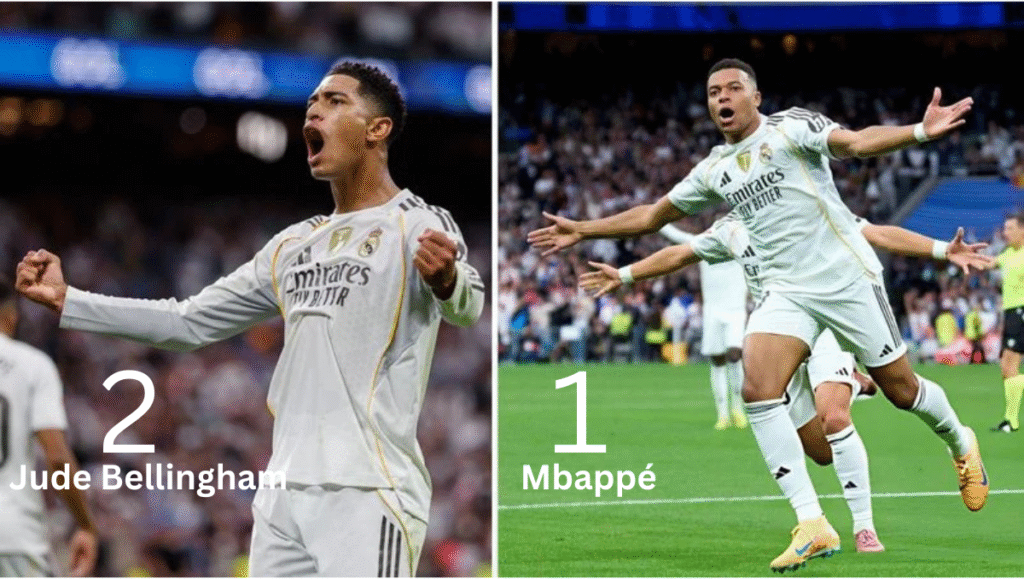
Dek
A 2–1 Bernabéu win built on first-half precision, second-half control, a Szczęsny penalty save, and late Barça indiscipline. This Real Madrid vs Barcelona analysis breaks down shapes, traps, and turning points. [1][2][3][4]
Key Tactical Takeaways
- Madrid’s asymmetrical 4-3-2-1 (Vinícius narrow, Güler roaming) created vertical lanes for Mbappé; Bellingham’s timing between lines unlocked the 22′ opener. [1][2]
- Barça’s rest-defense wobbles—a high line without synchronized pressure—were punished by direct runs; Fermín’s 38′ equalizer came from a rare, well-timed third-man run. [2][4]
- Szczęsny’s penalty save on Mbappé kept Barça alive, but Pedri’s stoppage-time red ended their late push. [2]
- Alonso’s in-game tweak: deeper block + transition outlets (Rodrygo, Carvajal on) to protect the 2–1, concede sterile possession, and close the door. [2][4]
- Set-piece & offside discipline: Madrid had a goal chalked off; the line management by both teams was a constant chess match. [2]
Tactical Essentials
- Final score: Real Madrid 2–1 Barcelona — Mbappé 22′, Fermín 38′, Bellingham 43′. [1][3][4]
- Big moments (2H): Szczęsny saves Mbappé penalty; Pedri sent off in stoppage time. [2]
- Base shapes:
- Real Madrid: 4-3-2-1 in possession (Güler inside right half-space; Vinícius narrow off Mbappé), 4-4-2/4-5-1 out of possession with Bellingham stepping.
- Barcelona: 4-3-3/3-2-5 in possession (Koundé tucking, Balde high), 4-4-2 press out of possession with Rashford joining Torres.
- Notable match-ups: Mbappé vs Cubarsí/Koundé depth management; Yamal vs Álvaro Carreras in the wide channel. [2]
- Key subs: Carvajal & Rodrygo for Valverde/Vinícius to stabilize right side and keep a transition threat. [2]
- Metrics (directional): Madrid created the better big chances; Barça had more possession, less penetration. [2][4]
Analysis & Tactics — The Deep Dive
Shapes & Roles
Xabi Alonso set Madrid up in an asymmetrical 4-3-2-1. On the left, Vinícius operated more like a second striker, pinning the last line to open the inside channel for Bellingham’s surges. On the right, Arda Güler tucked inside the half-space to stitch combinations with Valverde and release Mbappé into the right-center lane. The effect: constant vertical access without needing expansive width.
Hansi Flick’s Barça built in a 3-2-5: Koundé often forming the back three with Cubarsí and Eric García, Balde high, and Pedri–De Jong as the pivot. Yamal held width, Fermín arrived late between defenders, and Rashford flexed between wing and nine. The structure promised control, but rest-defense behind the ball lagged—particularly once the first line was broken. [2][4]
Build-Up & Pressing

Madrid’s first line press mirrored Barça’s double pivot: Bellingham shaded passes into De Jong, while Tchouaméni/Camavinga stepped to screen the inside. Triggers were predictable—backward pass to García, or a square ball from Koundé into the pivot—which launched Mbappé’s curved run to trap the receiver.
Barça’s press began 4-4-2 with Rashford alongside Ferran, funneling Madrid to the left touchline. The problem: when Madrid skipped the first pressure with a vertical third-man pattern (Güler → Bellingham → Mbappé), Barça’s line was exposed. The disallowed early strike flagged the risk; the 22′ opener punished it. Bellingham received between lines, fed Mbappé in stride, and the finish was ice-cold. 1–0. [1][4]
Progression & Creation
Madrid’s most reliable progression was inside-out: win the middle, release Mbappé/Vinícius in the channels. Güler’s gravity pulled Balde narrow, freeing Valverde for delayed overlaps—or simply to guard the rest-defense. On the opposite side, Vinícius’ inside starting position forced Cubarsí into uncomfortable depth decisions.
Barça’s best moments came when Yamal received early to feet and combined diagonally with Koundé → Pedri → Fermín. That chain produced the 38′ equalizer: a quick progression, a squared ball, and Fermín arriving in the pocket to finish. It was the template—third-man runs behind Madrid’s midfield line—too rarely repeated. 1–1. [2][3]
Madrid’s response was emblematic of Alonso’s verticalism. A second-phase ball found Bellingham ghosting into zone 14; the Englishman guided a low finish on 43′. His knack for time-on-the-edge—appearing as the play breathes—remains Madrid’s cheat code. 2–1 at HT. [1][3][4]
Transitions & Rest-Defense
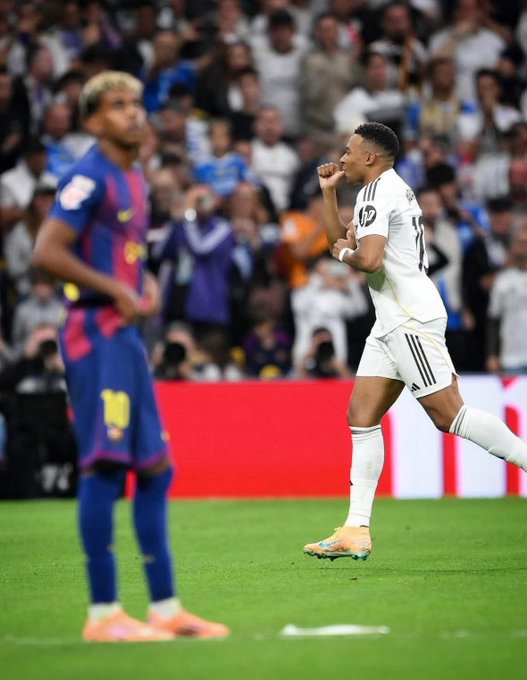
This Clásico swung on transition control. With a lead, Madrid started to shelter: fullbacks slightly deeper, wingers higher to threaten the counter. Tchouaméni sat in the cover shadow of Pedri, while Camavinga hunted second balls. When Barça lost the ball with numbers forward, one vertical pass put Mbappé or Vinícius racing into space.
Barça’s rest-defense (often 2+1 against three Madrid runners) was vulnerable. The distances from the last pass to the counter-press were long, and the cover by Cubarsí/Koundé became a footrace rather than a duel. The penalty episode underlined the dynamic: a broken line, emergency defending, and Szczęsny bailing them out with a sharp save from Mbappé. [2]
Adjustments & Game Management
Alonso’s hour-mark shift—Carvajal for Valverde and Rodrygo for Vinícius—tightened the right side and maintained a running threat without sacrificing defensive reliability. The shape flattened to a 4-4-2 without the ball; Güler’s role reduced to possession security and set-piece delivery.
Flick sought directness: minutes for Araújo to add aerial and defensive punch, plus fresh legs to keep Rashford high. The pressure created territory but not incision; Madrid’s block stayed compact, forcing late crosses that Militão and Tchouaméni handled.
The final act: Barça chasing, Madrid managing time and distances. Pedri’s stoppage-time dismissal (two yellows) closed the door on a comeback. From there, Madrid suffocated the rhythm, funneled play wide, and cleared their lines with minimal risk. Szczęsny’s heroics (the penalty save) prevented a wider margin, but the tactical ledger favored Madrid. [2]
Set-Plays
Madrid threatened with near-post crowding and back-post isolations for Mbappé/Bellingham. Barça’s zonal hybrid held, though second phases remained dangerous. One Madrid goal was ruled offside—the line management game was perpetual. [2]
Standout Individuals
- Jude Bellingham — Goal, pre-assist patterns, and elite tempo control between the lines. His 43′ finish was about timing, not power. [1][4]
- Kylian Mbappé — Constant depth threat; 22′ dagger plus drawn penalty (saved). His gravity bent Barça’s line all night. [1][2]
- Aurélien Tchouaméni — Anchor in rest-defense; countless screens on Pedri’s lane and aerial dominance on clearances.
- Wojciech Szczęsny — The penalty stop kept Barça one kick away deep into the game. [2]
- Fermín López — Smart second-line timing for 1–1; one of Barça’s few runners breaking Madrid’s compactness. [3][4]
What It Means
Madrid go five points clear and bank a statement win against the reigning champions. Alonso’s model—direct verticality + elite rest-defense—is scaling to big games, with Bellingham’s timing and Mbappé’s depth runs as the twin pillars. For Barça, the possession control is intact, but transition protection and late-game discipline (Pedri’s red) must sharpen ahead of the winter grind. [2][4]
FAQs
-
What is the final score and who scored?
Real Madrid 2–1 Barcelona — Mbappé (22′), Fermín (38′), Bellingham (43′). [1][3][4]
-
Did a penalty and a red card occur?
Yes. Szczęsny saved an Mbappé penalty in the second half, and Pedri was sent off in stoppage time. [2]
-
Who had more of the ball?
Barcelona, but Madrid produced the clearer chances via vertical transitions. [2][4]
-
What was Madrid’s key tactical edge?
An asymmetrical front and vertical third-man runs that split Barça’s first press and attacked space behind the high line. [1][2]
-
What’s the primary keyword to target?
Real Madrid vs Barcelona analysis — use it in the title, first 100 words, and headers.
References
[1] ESPN Match Report: Real Madrid 2–1 Barcelona — goals and narrative of the win. ESPN.com
[2] The Guardian Live/Reaction — penalty save, Pedri red, flow of second half. Le Guardian+1
[3] FC Barcelona Match Hub — confirms scoreline and goal minutes. FC Barcelona
[4] AS USA Live Blog — minute-by-minute context and tactical beats. AS USA




More Stories
Real Madrid TV penalty controversy grows after 245 replays of Betis handball appeal
Alvaro Arbeloa refereeing rant adds to Real Madrid frustration after Betis draw
Real Madrid title hopes take major hit after late Real Betis collapse