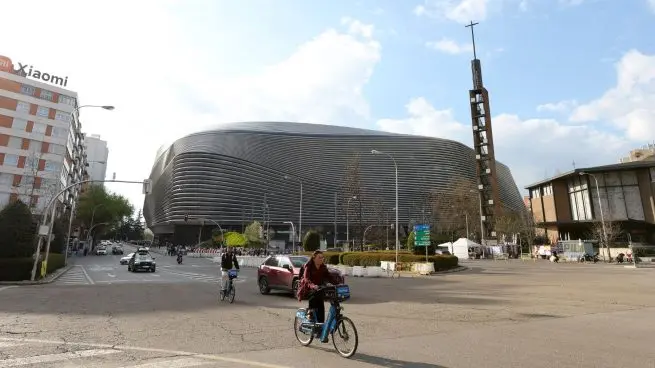
The Bernabéu concerts case swung back in Real Madrid’s favor on Wednesday, giving the club an important legal win in one of the most sensitive off-field stories around the stadium redevelopment. Real Madrid announced that Madrid’s Provincial Court fully upheld the appeals filed by José Ángel Sánchez and Real Madrid Estadio S.L., with the Public Prosecutor’s Office supporting those appeals.
For Madrid fans, this matters well beyond legal language. The Bernabéu was rebuilt to be much more than a matchday venue, and concerts were always part of the broader commercial vision around the stadium. That is why this ruling feels significant even though it does not automatically mean live shows can return right away. OKDIARIO stressed that the economic logic of the renovation depended in part on hosting concerts, while the club’s own statement focused on clearing Real Madrid and its general director of criminal responsibility.
What the Bernabéu concerts case ruling actually says
The key point is straightforward: the court concluded that neither José Ángel Sánchez nor Real Madrid Estadio S.L. committed any criminal offense in connection with the concerts held at the Santiago Bernabéu. The club said the ruling definitively ends the criminal process against them and reverses the January 15, 2026 order that had moved the case forward through abbreviated criminal proceedings.
Just as important, the ruling places responsibility for complying with noise limits on the promoter companies that organize and execute each event. Real Madrid’s statement says the court found that those promoters, not the club or its stadium company, were responsible for ensuring compliance with Madrid’s decibel regulations. The statement also says the court found that violating a general administrative environmental rule does not by itself trigger criminal law.
That distinction is massive for Real Madrid. This was not merely a procedural delay or a narrow technicality. It was a clear ruling, at least at this criminal stage, that the club and one of its top executives were not the legally liable parties in the way neighbors and complainants had argued. That gives Madrid an institutional victory at a time when the club has already been dealing with a rough sporting mood and growing scrutiny around major decisions.
Why Real Madrid’s win does not solve everything
This is where the story gets more interesting. Winning the Bernabéu concerts case is not the same thing as solving the Bernabéu concerts problem. Even the source article made that clear, noting that this resolution does not mean concerts can immediately be held again at the stadium. EL PAÍS reported the same thing, saying several promoters do not expect concerts to return for now and that the ruling only removes criminal responsibility from the club and shifts it toward the promoters.
EL PAÍS also reported that the case examined criminal responsibility, not broader social, civil, or commercial responsibility toward residents affected by the noise. That is a crucial nuance. Real Madrid may feel vindicated by the court’s conclusion, but the practical issue that made the Bernabéu such a flashpoint has not disappeared: neighbors still complained, noise limits were still central to the dispute, and promoters still do not believe conditions are right for concerts to resume under the current setup.
In fact, some of the strongest lines from the wider reporting point in that direction. EL PAÍS said affected residents plan to appeal, and promoter sources told the paper that concerts will remain on hold unless the stadium is further adapted or the legal framework changes. That means Real Madrid’s courtroom success could still coexist with a commercial pause around one of the stadium’s most valuable non-football uses.
Why this matters so much for the Bernabéu project
The deeper Real Madrid angle here is obvious. The club did not spend heavily on transforming the Bernabéu just to make it look more futuristic on matchdays. The long-term strategy has been about turning the stadium into a year-round business engine, and concerts were one of the clearest symbols of that plan. OKDIARIO framed the ruling as fundamental because the profitability of the renovation depended in large part on this kind of event revenue.
That is why Wednesday’s ruling should be seen as a defensive victory rather than a total breakthrough. It protects the club from a damaging criminal outcome and supports Real Madrid’s legal argument that promoters were the parties responsible for event execution and sound compliance. But it does not yet restore the full commercial model the club likely wants around the stadium. The legal cloud is lighter now, yet the operational challenge remains.
There is also a reputational element here. Real Madrid clearly wanted this result, not only to avoid sanctions but to push back against the idea that the club itself had crossed into criminal wrongdoing. The official statement called the complaint “absolutely unfounded” and “instrumental,” strong language that shows how seriously the club took the case. The ruling gives Madrid firmer ground to defend its position in public, even if debate over the Bernabéu’s place in the neighborhood is far from over.
What this means for Real Madrid
The biggest takeaway is that Real Madrid have won a highly relevant legal battle without yet winning the broader Bernabéu debate. In the short term, that is still meaningful. The club avoids criminal liability in a case that could have become a major embarrassment, José Ángel Sánchez is cleared in the same process, and Madrid can now argue that the court backed its central defense.
But fans should not read this as the final chapter. The noise issue around the stadium still matters, the relationship with nearby residents still matters, and the broader business question still matters. If concerts remain paused, one of the most important non-matchday pillars of the new Bernabéu remains incomplete, no matter how strong this legal result looks on paper.
This is also the kind of story that connects naturally to several wider Real Madrid themes readers will keep following closely: the financial power of the new stadium, the club’s long-term commercial strategy, and how Florentino Pérez’s model for the Bernabéu holds up under real-world pressure away from the pitch. Those questions are not going anywhere.
Conclusion
For now, the Bernabéu concerts case is a clear legal win for Real Madrid, but not a full operational reset. The club got the ruling it wanted, yet the real next step is whether it can eventually make concerts viable again without reigniting the same conflict. That is what will determine whether this becomes a turning point or just an important pause in a much longer Bernabéu story.
Sources Used:
- OKDIARIO(https://okdiario.com/diariomadridista/real-madrid/justicia-da-razon-real-madrid-caso-conciertos-bernabeu-634566)
- Real Madrid(https://www.realmadrid.com/en-US/news/club/announcements/comunicado-oficial-la-justicia-da-la-razon-al-real-madrid-en-el-caso-de-los-conciertos-en-el-bernabeu-13-05-2026)
- EL PAÍS(https://elpais.com/espana/madrid/2026-05-13/la-justicia-da-la-razon-al-real-madrid-y-responsabiliza-a-las-empresas-promotoras-por-los-conciertos-del-bernabeu.html)




More Stories
Yan Diomande Real Madrid Debut Delayed as Mourinho Leaves Winger Out
Ferencvaros vs Real Madrid: Mourinho Starts Endrick as Bernardo Silva Waits
Rodri Real Madrid Transfer Collapses as Barcelona Wins Player’s Choice